by Zonemarcus | Feb 4, 2019 | Today's Information
Can pomegranate improve heart health?
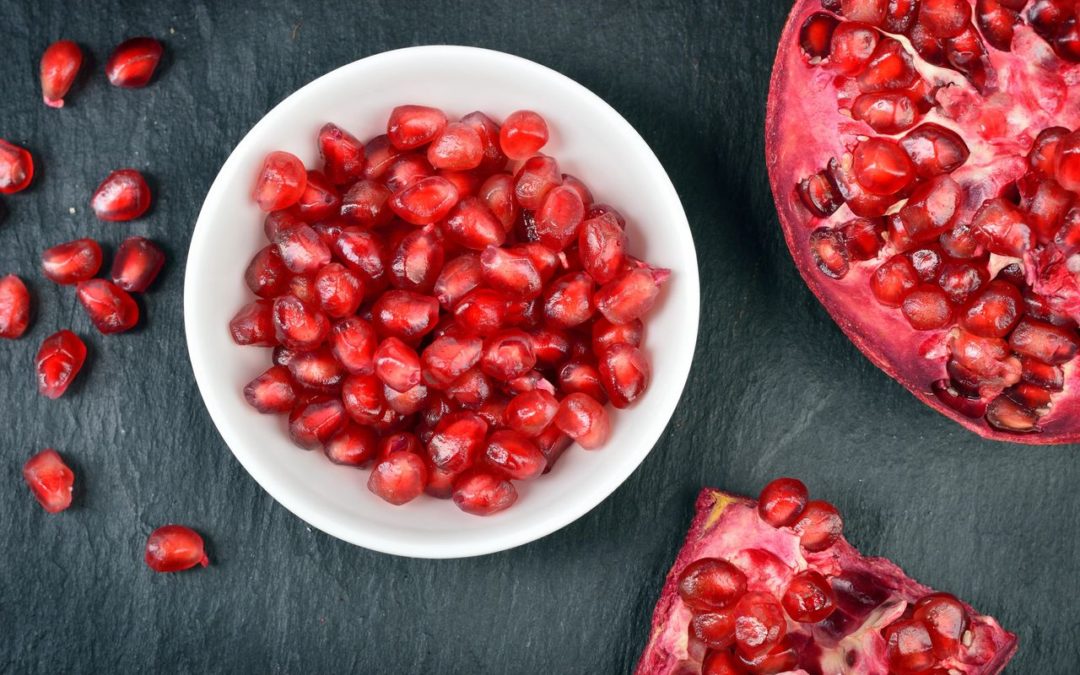
Pomegranate is an excellent way to increase nitric oxide. It has other beneficial effects on heart health as well. Pomegranate juice consumption for 3 years by patients with carotid artery stenosis reduces common carotid intimamedia thickness, blood pressure and LDL oxidation.
https://lnkd.in/e2AazQ3

by Zonemarcus | Dec 28, 2018 | Uncategorized
6 Current Ways To Improve Our Heart Health is a book written by Donald D. Zone. This book explains the importance of heart health and the ways you can improve the health of your heart daily.
Facilisis mauris sit amet massa vitae tortor condimentum. Ac tincidunt vitae semper quis lectus nulla. Congue eu consequat ac felis. Consectetur libero id faucibus nisl tincidunt eget nullam non nisi. Pulvinar neque laoreet suspendisse interdum consectetur libero id faucibus. Ultricies leo integer malesuada nunc vel risus commodo viverra. Integer eget aliquet nibh praesent. Sodales ut etiam sit amet nisl. Blandit turpis cursus in hac habitasse platea dictumst quisque. Leo duis ut diam quam nulla. Eget nunc lobortis mattis aliquam faucibus. In mollis nunc sed id semper risus in hendrerit. Id donec ultrices tincidunt arcu non sodales neque sodales. In egestas erat imperdiet sed euismod nisi. Cras tincidunt lobortis feugiat vivamus at augue. Augue mauris augue neque gravida in fermentum. Mi tempus imperdiet nulla malesuada pellentesque elit eget gravida. Posuere ac ut consequat semper viverra nam libero justo.

by Zonemarcus | Dec 26, 2018 | Today's Information
VERY HIGH CHOLESTEROL
FAMILIAL HYPERLIPIDEMIA – A JOKER IN THE DECK
We are not all biologically alike. The majority of what we hear today unfortunately assumes that we are.
One in very roughly 300 of us in the states have a gene that results in heart disease at a rapid rate. Early disability and death are common if this is the case. The good news is recently there is a valid treatment for this otherwise devastating disorder.
Really, there is nothing fair about it. But then, those with this disorder almost certainly have other genes and characteristics that are entirely fortunate.
We enjoy a card game and don’t intend to be flippant about this problem, but clearly if one is dealt this card, action is needed. It would be a great card to pass to the player on our left, but then again that is not an option here.
Familial hyperlipidemia (FH), a problem with chromosome 19, results in persistent major increase in bad cholesterol (LDL.) Like many biological situations, it gets very complex and wide ranges of values are confusing. However, if cholesterol is over 280 or LDL over 190, FH may be present. Checking this out is a great choice.
Presently, 90% of individuals with FH have not been diagnosed.
We truly enjoy the humor and c’est la vie attitudes we have noted in some with this disorder. Our other thought, however, is that avoiding that Egyptian river known as denial and taking a few serious moments in pursuing this are more than worth it.
Many treatments can help. A new class of medications, PCSK9 inhibitors, are an option and should be carefully considered.
Contact the FH website to get informed. Start to fight this killer with the counsel of your health care professional.
Thefhfoundation.org
Wald, David S.; Bestwick, Jonathan P.; Morris, Joan K.; Whyte, Ken; Jenkins, Lucy; Wald, Nicholas J. (2016). “Child–Parent Familial Hypercholesterolemia Screening in Primary Care”. New England Journal of Medicine. 375 (17): 1628–1637. doi:10.1056/NEJMoa160277

by Zonemarcus | Dec 26, 2018 | Today's Information
Microgreens are collections of especially nutritious vegetables that are harvested when only 1 to 3 inches tall. At this early stage, they contain high concentrations of many heart healthy nutrients compared to their fully grown plant counterparts. Thus, beet, chard, and spinach microgreens among others pack just as much if not more of the antioxidant and other nutrients as the mature vegetable.
We find this to be especially useful scientifically based information and consider inclusion of microgreens in heart healthy nutrition as an easy yet excellent choice. They taste good and can be easily used as additions to soups, and salads or as a garnish on any other food.
Visit Roka Farms https://lnkd.in/efWHSg8
Further Reading:
1. Lester, G. E.; Hallman, G. J.; Perez, J. A. γ-Irradiation Dose: Effects on Baby-Leaf Spinach Ascorbic Acid, Carotenoids, Folate, α- Tocopherol, and Phylloquinone Concentrations. J. Agric. Food. Chem. 2010, 58, 4901−4906.
2. Xiao,Z; Lester,G.; Luo,Y.; Wang,Q. Assessment of Vitamin and Carotenoid Concentrations of Emerging Food Products: Edible Microgreens. Journal of Agricultural and Food Chemistry 2012,60,7644-7651

by Zonemarcus | Dec 26, 2018 | Today's Information
Probiotics help the heart and blood vessels. The probiotic bacteria we have in our gut directly relate to the health of our blood vessels and heart. Our best health means maintaining a flourishing “inner garden” of microbes in our entire digestive tract from top to bottom. This is done by taking in the beneficial live organisms which occur in many foods, especially fermented ones such as sauerkraut, kefir and brine-cured olives. These beneficial organisms are contained in several Asian foods not commonly included in the western diet including kimchi, natto, miso, tempeh, and kombucha. More conveniently they are concentrated in probiotic capsules. Our oral organisms are also critical in this process and can be maintained while using certain types of toothpaste and mouthwash.
Ingesting prebiotics improves the scaffolding on our inner garden thrives. Bananas, asparagus, onions, and apples are good sources. Prebiotic fiber supplements help conveniently achieve this goal.
We noted the following excellent review of the recent science on this important factor in our health:
Komaroff AL. The Microbiome and Risk of Atherosclerosis. JAMA. 2018;319(23):2381-2382.