by Zonemarcus | Feb 4, 2019 | Today's Information
2 Tablespoonful’s of Extra Virgin Olive Oil per day can improve our heart health!
It’s simple to keep it handy and use it in or on our food. We have a flavor we like and keep the bottle on the countertop for use on salad, vegetables, and many other foods. It’s amazing how that bottle is gone in a week or two.
The first pressing of olives (extra virgin olive oil or EVOO) produces a liquid rich in beneficial phenols. Refined olive oils do not have this property.
We currently use the commonly available and reasonably priced Olive Ranch brand from Southern California. Different flavors are available and begin to rival the nuances of wine tasting.
Why do we feel this is beneficial to our heart health? Studies have demonstrated that Extra Virgin Olive Oil:
- Decreases Inflammation
- Increases not only the level of beneficial good cholesterol (HDL) in the blood but quite importantly also increases its functionality.
- Lowers blood pressure
- Makes us feel full
- Decreases harmful oxidation
- Lowers blood sugar
- Increases the body’s sensitivity to insulin
What an easy and tremendous way to improve our HeartHealthToday.
Further Reading:
Fits M, Cladellas M, de la Torre R, et al. Antioxidant effect of virgin olive oil in patients with stable coronary heart disease: a randomized, crossover, controlled, clinical trial. Atherosclerosis. 2005;181(1):149-158.
R Madigan C, Ryan M, Owens D, Collins P, Tomkin GH. Dietary unsaturated fatty acids in type 2 diabetes: higher levels of postprandial lipoprotein on a linoleic acid-rich sunflower oil diet compared with an oleic acid-rich olive oil diet. Diabetes Care. 2000;23(10):1472-1477
Bes-Rastrollo M, Sanchez-Villegas A, de la Fuente C, de Irala J, Martinez JA, Martinez-Gonzalez MA. Olive oil consumption and weight change: the SUN prospective cohort study. Lipids. 2006;41(3):249-256
Estruch R, Ros E, Salas-Salvado J, et al. Primary prevention of cardiovascular disease with a Mediterranean diet. N Engl J Med. 2013;368(14):1279-1290.
Babio N, Toledo E, Estruch R, et al. Mediterranean diets and metabolic syndrome status in the PREDIMED randomized trial. CMAJ. 2014;186(17):E649-657.
Salas-Salvado J, Bullo M, Babio N, et al. Reduction in the incidence of type 2 diabetes with the Mediterranean diet: results of the PREDIMED-Reus nutrition intervention randomized trial. Diabetes Care. 2011;34(1):14-19.
by Zonemarcus | Feb 4, 2019 | Today's Information
“You take two bodies and you twirl them into one; their hearts and their bones. And they won’t come undone Hearts and bones” Paul Simon, 1983
Following the direction of Paul Simon’s 1983 album title song, the latest biological science has uncovered still another strong connection between our hearts and our bones.
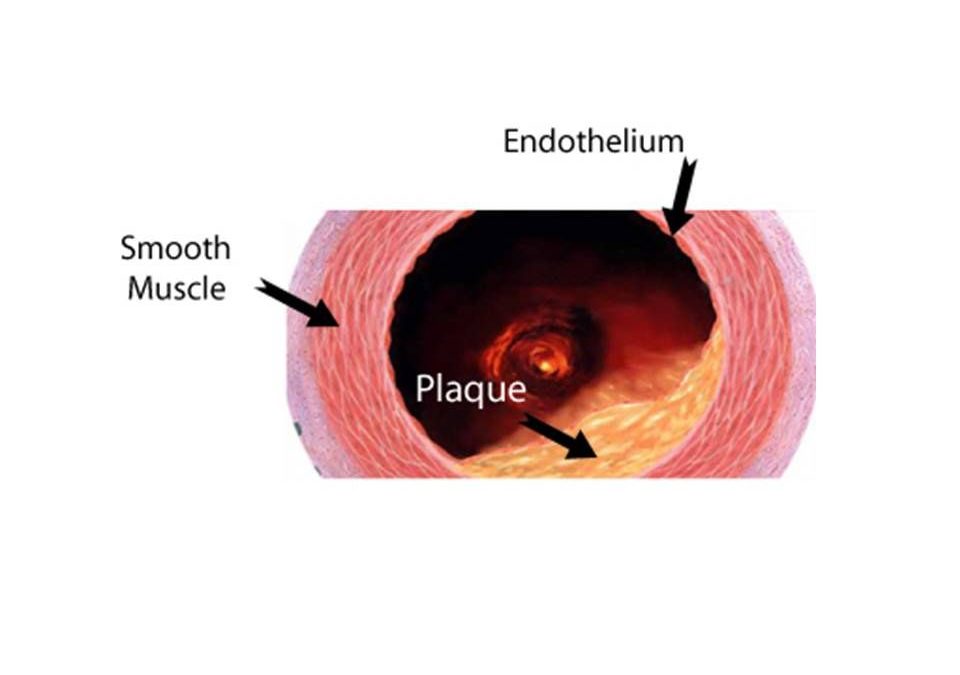
Mutated stem cells deep in our bone marrow can produce a variety of white blood cells which have a particularly inflammatory effect. As they enter the plaque in our blood vessels in an attempt to do their repair job they may well cause increased plaque growth and rupture. Remember that it is the breaking open of a plaque in our blood vessels that causes the sudden heart attack or stroke.
The practicality of this is that it reinforces our conviction that we must keep unnecessary inflammation to a minimum.
We should strongly consider avoiding foods that produce inflammation. These are not the same for everyone. Some have trouble with dairy, others shellfish,and some others gluten. Excess sugar in its many forms can be inflammatory for most.
Whole food plant based diets are likely one of the most effective ways, but not the only way, to keep inflammation under control.
Certain foods that fight inflammation include blueberries, green tea, beets, the broccoli family, and our favorite, extra virgin olive oil. Ginger and turmeric are well known for their property of decreasing inflammation. The most active ingredient of turmeric in this regard appears to be curcumin.
What causes the mutations of these stem cells in the first place? Toxins such as certain chemicals and smoke are among the likely culprits.
These new discoveries have of course produced yet another acronym (C.H.I.P.) standing for –get ready for this one–Clonal Hematopoiesis of Indeterminate Potential. New CHIP societies and CHIP clinics are already forming and are not to be confused with the kid’s CHIP– Children’s Health Insurance Program.
The studies to date are impressive and may help explain why some of us with few or none of the traditional “risk factors” of high blood pressure, smoking, diabetes and high cholesterol still have heart attacks and strokes.
We continue to advocate the I CAN DO acronym. The I is for reducing unnecessaryInflammation to improve our Heart Health Today.
Further Reading:
- Jaiswal, S., Natarajan, P., Silver, A. J., Gibson, C. J., Bick, A. G., Shvartz, E., et al. (2017). Clonal hematopoiesis and risk of atherosclerotic cardiovascular disease. N. Engl. J. Med. 377, 111–121. doi: 10.1056/NEJMoa1701719
- Jaiswal S, Fontanillas P, Flannick J, et al. Age-related clonal hematopoiesis associated with adverse outcomes. N Engl J Med 2014;371:2488-2498
3. Is Coronary Atherosclerosis One Disease or Many? Circulation. 2017;135:1005–1007. DOI: 10.1161/CIRCULATIONAHA.116.02
by Zonemarcus | Feb 4, 2019 | Today's Information
What is it? Can we measure it?
CORONARY ARTERY CALCIFICATION SCORE – A VALUABLE GUIDE FOR THOSE OF US AT RISK
A simple X-Ray exam that should cost less than $90 is a very accurate measure of the amount of blockage which has developed in our heart arteries. Knowing that number can be an effective motivator for employing an even more effective prevention and reversal program in our lives.
As plaque forms in our arteries, it also becomes calcified, providing a marker that is easily measured by X-Ray. The more calcification, the more plaque, and generally the more serious we must become about managing this health hazard which can result in serious disability or death.
A score of zero is is normal
1 to 99 indicates mild disease
100 to 399 indicates moderate disease
Over 400 indicates severe disease
Extensive guidelines on the use of this test are available from several sources.
The score is not perfect. Plaque can occur without calcification, especially in younger individuals.
The test takes about 15 minutes and no dye is used. The radiation exposure is generally minimal, about equivalent to what we get from our surroundings in one year. The scanners vary widely in the radiation dose, so we pick a good one. Pregnant women or those who may become pregnant should avoid the test. Under age 40, it may not be worth having.
An amazingly comprehensive review of this is contained in the Jan 2018 issue of JACC.
1.Coronary Artery Calcification and its Progression What Does it Really Mean? Hiroyoshi Mori, Sho Torii, Matthew Kutyna, Atsushi Sakamoto, Aloke V. Finn, Renu Virmani
Journal of the American College of Cardiology: Cardiovascular Imaging Jan 2018, 11 (1) 127-142; DOI:10.1016/j.jcmg.2017.10.012
- Coronary Calcium Score and the New Guidelines Javier Sanz
Journal of the American College of Cardiology Oct 2015, 66 (15) 1669-1671; DOI: 10.1016/j.jacc.2015.08.041
by Zonemarcus | Feb 4, 2019 | Today's Information
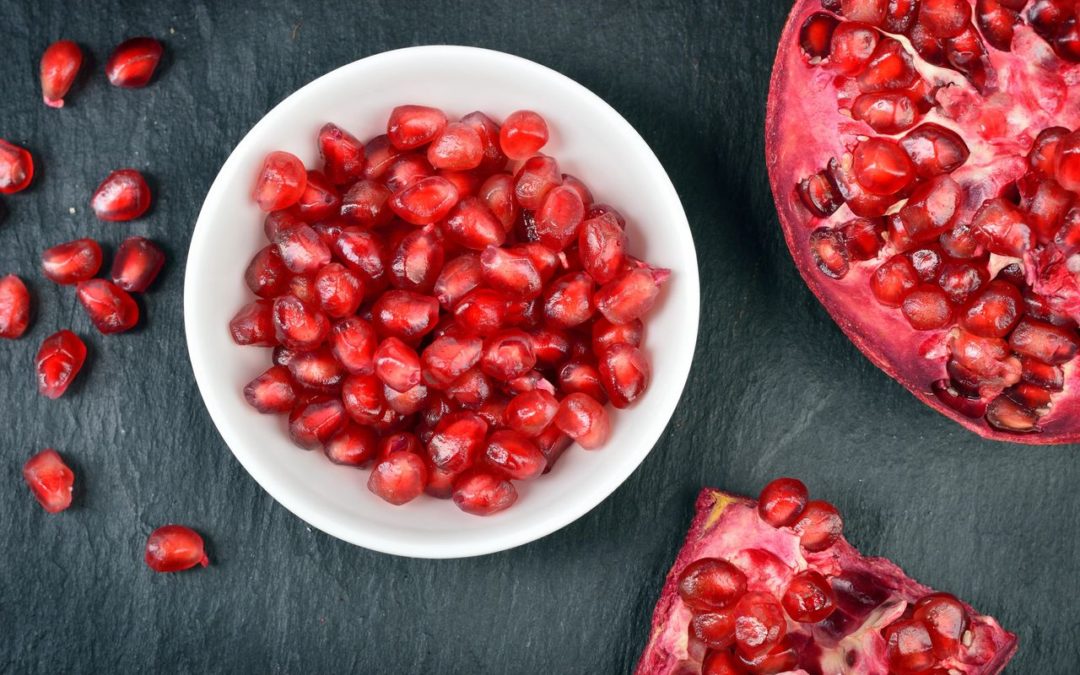
Can pomegranate improve heart health?
Pomegranate is an excellent way to increase nitric oxide. It has other beneficial effects on heart health as well. Pomegranate juice consumption for 3 years by patients with carotid artery stenosis reduces common carotid intimamedia thickness, blood pressure and LDL oxidation.
https://lnkd.in/e2AazQ3

by Zonemarcus | Dec 26, 2018 | Today's Information
VERY HIGH CHOLESTEROL
FAMILIAL HYPERLIPIDEMIA – A JOKER IN THE DECK
We are not all biologically alike. The majority of what we hear today unfortunately assumes that we are.
One in very roughly 300 of us in the states have a gene that results in heart disease at a rapid rate. Early disability and death are common if this is the case. The good news is recently there is a valid treatment for this otherwise devastating disorder.
Really, there is nothing fair about it. But then, those with this disorder almost certainly have other genes and characteristics that are entirely fortunate.
We enjoy a card game and don’t intend to be flippant about this problem, but clearly if one is dealt this card, action is needed. It would be a great card to pass to the player on our left, but then again that is not an option here.
Familial hyperlipidemia (FH), a problem with chromosome 19, results in persistent major increase in bad cholesterol (LDL.) Like many biological situations, it gets very complex and wide ranges of values are confusing. However, if cholesterol is over 280 or LDL over 190, FH may be present. Checking this out is a great choice.
Presently, 90% of individuals with FH have not been diagnosed.
We truly enjoy the humor and c’est la vie attitudes we have noted in some with this disorder. Our other thought, however, is that avoiding that Egyptian river known as denial and taking a few serious moments in pursuing this are more than worth it.
Many treatments can help. A new class of medications, PCSK9 inhibitors, are an option and should be carefully considered.
Contact the FH website to get informed. Start to fight this killer with the counsel of your health care professional.
Thefhfoundation.org
Wald, David S.; Bestwick, Jonathan P.; Morris, Joan K.; Whyte, Ken; Jenkins, Lucy; Wald, Nicholas J. (2016). “Child–Parent Familial Hypercholesterolemia Screening in Primary Care”. New England Journal of Medicine. 375 (17): 1628–1637. doi:10.1056/NEJMoa160277

by Zonemarcus | Dec 26, 2018 | Today's Information
Microgreens are collections of especially nutritious vegetables that are harvested when only 1 to 3 inches tall. At this early stage, they contain high concentrations of many heart healthy nutrients compared to their fully grown plant counterparts. Thus, beet, chard, and spinach microgreens among others pack just as much if not more of the antioxidant and other nutrients as the mature vegetable.
We find this to be especially useful scientifically based information and consider inclusion of microgreens in heart healthy nutrition as an easy yet excellent choice. They taste good and can be easily used as additions to soups, and salads or as a garnish on any other food.
Visit Roka Farms https://lnkd.in/efWHSg8
Further Reading:
1. Lester, G. E.; Hallman, G. J.; Perez, J. A. γ-Irradiation Dose: Effects on Baby-Leaf Spinach Ascorbic Acid, Carotenoids, Folate, α- Tocopherol, and Phylloquinone Concentrations. J. Agric. Food. Chem. 2010, 58, 4901−4906.
2. Xiao,Z; Lester,G.; Luo,Y.; Wang,Q. Assessment of Vitamin and Carotenoid Concentrations of Emerging Food Products: Edible Microgreens. Journal of Agricultural and Food Chemistry 2012,60,7644-7651