
Medically reviewed by Dr. Don Zone, MD, FACC, FAARM — Board-Certified Cardiologist
Once people decide to support their NAD+ levels, the next question is almost always about format. Liposomal NAD+ promises to protect the molecule on its way in. Sublingual tablets promise to skip digestion entirely. Clinics offer IV drips that promise to put NAD+ straight into the bloodstream. Each option costs more than the last, and each comes with a confident explanation of why it absorbs better.
As a cardiologist, I’m trained to ask a simple question about any delivery claim: has anyone measured it, in people, against the alternative? This guide walks through what the human data actually shows for each form, where the evidence is industry-funded or preliminary, and how I’d spend the money if it were my own.
The Short Answer: Does Liposomal NAD+ Work Better Than Capsules?
There is no good evidence yet that liposomal or sublingual NAD+ works better than ordinary swallowed capsules of an NAD+ precursor such as NMN or NR. Oral NMN and NR have multiple independent randomized trials showing they raise blood NAD+, with one 2026 head-to-head trial finding about a doubling in two weeks. Liposomal NAD+ data so far comes from small, manufacturer-run studies, and the first randomized comparison of sublingual and swallowed NMN found no difference in blood NAD+ levels. IV NAD+ has no outcome trials. For most people, a swallowed precursor capsule at an evidence-based dose is the best-supported and most affordable choice.
First, the Problem Every Delivery Form Is Trying to Solve
NAD+ is a large, electrically charged molecule. That makes it poorly suited to crossing cell membranes intact, and when you swallow it, enzymes in the gut break much of it down into smaller pieces — mainly NMN, NR and nicotinamide — before absorption. Reviews of NAD+ metabolism (here and here) describe this breakdown in detail.
That’s why most of the research focuses on precursors — the smaller building blocks your cells use to make NAD+ themselves. Two findings matter here:
- The gut has a dedicated door for NMN. Researchers identified a transporter (Slc12a8) in the small intestine of mice that specifically carries NMN into cells. Notably, its activity was higher in older animals.
- Your gut bacteria join in. A 2025 tracer study in mice found that only a portion of swallowed NMN and NR is absorbed directly, while much of the rest is converted by gut microbes into other NAD+ building blocks that the liver then uses.
The takeaway: “it gets broken down in the gut” is true, but it isn’t the end of the story. Breakdown products are still raw material for NAD+. The real test is whether NAD+ levels go up in people — and for swallowed precursors, they reliably do.
Oral Capsules (NMN and NR): The Benchmark
Swallowed capsules are the format used in nearly every human NAD+ trial. A few highlights:
- A 2026 four-arm trial in Nature Metabolism found that 1 gram a day of either NMN or NR roughly doubled whole-blood NAD+ within 14 days, while plain nicotinamide did not raise baseline levels.
- A 60-day randomized trial of 80 adults found blood NAD+ rose at 300, 600 and 900 mg of NMN daily, with benefits on walking endurance peaking around 600 mg.
- Older men taking 250 mg of NMN daily for 12 weeks saw blood NAD+ rise compared with placebo.
These studies were run by multiple independent research groups, used placebo controls, and measured NAD+ over weeks rather than minutes. That’s the bar any “better-absorbed” format needs to clear. For dosing details, see our NAD+ dosage guide and how much NMN to take.
Liposomal NAD+: The Claims vs. the Data
A liposome is a microscopic bubble made of the same kind of fat molecules (phospholipids) that form cell membranes. The idea is sensible: wrap NAD+ in a protective shell so it survives digestion and fuses with cells. Liposomes have genuinely improved absorption for some nutrients. The question is whether that’s been shown for NAD+.
Here’s what I could find as of November 2026:
- A 2026 liposomal NAD+ study (CELLg8) gave 14 people 1,000 mg of liposomal NAD+ daily for two weeks and reported an average rise of about 64% in intracellular NAD+. However, the study was not randomized, had no placebo group, measured NAD+ from finger-stick blood spots, and was funded and run by the company that makes the product.
- A 2025 pharmacokinetic study of a branded liposomal NAD+ ingredient (LipoAvail) reported roughly 1.5 times higher NAD+ exposure than standard oral NAD+. That comparison was against plain NAD+, not against NMN or NR, and the results were released by the ingredient manufacturer; I couldn’t locate a peer-reviewed publication with the full data.
- A 2026 randomized, placebo-controlled trial of a “modulated” oral NAD+ formulation (not a liposome) reported a rise in whole-blood NAD+ over five days with no change in plasma NAD+. It’s a preprint — not yet peer reviewed — and was registered after the fact.
Put together: there are early signals that some liposomal or reformulated NAD+ products raise NAD+ in blood cells. There is no published head-to-head trial showing liposomal NAD+ beats NMN or NR, no long-term data, and almost all the evidence comes from the companies selling the technology. Liposomal products also tend to cost considerably more per milligram.
My take: liposomal NAD+ isn’t a scam, but it’s a premium price for an unproven advantage. If you already have a precursor with years of independent trial data, I don’t see a reason to switch.
Sublingual NAD+ and NMN: The First Head-to-Head Trial
Sublingual products dissolve under the tongue, where blood vessels sit close to the surface. The marketing usually claims faster absorption and “bypassing the liver.” Until recently, nobody had tested that directly.
In June 2026, a randomized crossover trial in Scientific Reports gave 14 healthy men NMN both ways — under the tongue and swallowed — and measured their blood for an hour. The result: no difference between routes in blood levels of NMN, nicotinamide or NAD+. The only difference was that sublingual dosing produced an earlier rise in two NAD+ breakdown products, called 2PY and 4PY.
That last detail caught my attention as a cardiologist. In a 2024 study in Nature Medicine, higher circulating 4PY was associated with greater risk of heart attack and stroke and appeared to promote vascular inflammation in experiments. That’s an association, and this tiny trial doesn’t show sublingual NMN is harmful. But it does suggest “faster in” may simply mean “faster broken down” — not more NAD+ where you want it.
My take: sublingual is fine if you prefer it, but the only direct comparison shows no NAD+ advantage over swallowing. It’s a small, one-hour study in men, so this could change — but the burden of proof is on the format making the claim.
Nasal Sprays and Patches
Nasal NAD+ sprays and transdermal patches have become popular, but I’m not aware of any published randomized human trial showing they raise NAD+ more effectively than swallowed precursors. The amount that can be delivered through the nose or skin is also limited. I’d consider these experimental.
IV and Injectable NAD+: A Reality Check
IV NAD+ is the most expensive option by far, often several hundred dollars per session. The most cited human study gave healthy men 750 mg of NAD+ by IV over six hours. Surprisingly, plasma NAD+ didn’t rise at all for the first two hours — the infused NAD+ was being cleared and broken down as fast as it went in.
The slow infusion rate itself reflects a practical problem: faster infusions tend to cause uncomfortable side effects like chest tightness, flushing and nausea.
There are no randomized trials showing IV NAD+ improves aging, energy or long-term health outcomes. When precursors swallowed at home roughly double blood NAD+ in two weeks, I can’t justify the cost, time and needle for most people. Anyone with heart disease should discuss IV therapies with their cardiologist before trying one.
Delivery Forms Compared
| Form | What the human data shows | Independent placebo-controlled trials? | Typical cost | My verdict |
|---|---|---|---|---|
| Oral NMN or NR capsules | Reliably raise blood NAD+; roughly doubled in 2 weeks at 1 g | Yes, several | Low to moderate | Best-supported choice |
| Liposomal NAD+ | Small, manufacturer-run studies suggest a rise in cellular NAD+ | No | Moderate to high | Promising but unproven advantage |
| Sublingual NMN/NAD+ | No difference vs swallowed NMN in blood NAD+ over 1 hour | One small crossover trial | Moderate | Fine, but no proven benefit |
| Nasal sprays / patches | No published controlled human NAD+ data I’m aware of | No | Moderate to high | Experimental |
| IV / injectable NAD+ | Plasma NAD+ didn’t rise for 2 hours during a 6-hour infusion | No outcome trials | Very high | Not worth it for healthy aging |
My Verdict by Budget
- Tight budget: a plain NMN or NR capsule at an evidence-based dose — 250–600 mg of NMN or 300–1,000 mg of NR daily. You get the format with the most research for the lowest price.
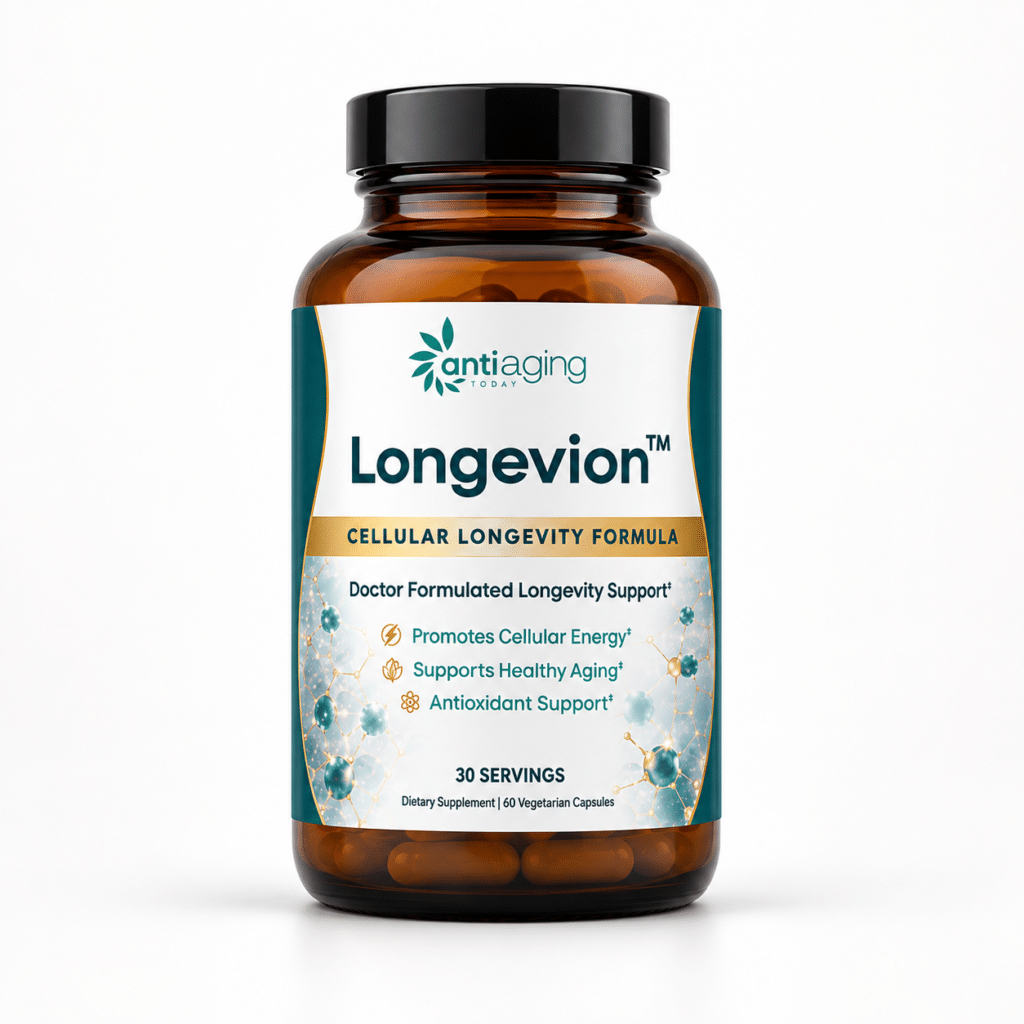
- Mid budget: a precursor paired with the cofactors your cells need to use it. That’s the approach I took with Longevion™: 300 mg of NMN alongside CoQ10, methylated B vitamins, magnesium malate, vitamin D3 and K2 in a two-capsule morning dose. The combination itself hasn’t been tested as a unit in a trial, but every ingredient is a standard swallowed form with human data behind it.
- Unlimited budget: honestly, the same answer. Spending more on delivery technology doesn’t buy you better evidence. Put the difference into a gym membership.
Comparing specific products? See the best NAD+ supplements, ranked, or browse our NAD+ and NMN collection. If you’re still deciding between molecules, start with NMN vs NAD+.
How to Judge Any “Better Absorption” Claim
- Was it compared with NMN or NR — not just plain NAD+? Beating plain oral NAD+ is a low bar.
- Was it randomized and placebo-controlled? Before-and-after measurements in a handful of people can’t separate the product from normal variation.
- Who ran it? Manufacturer-funded studies aren’t automatically wrong, but they need independent confirmation.
- Is it published and peer reviewed? Press releases and preprints are a starting point, not proof.
- How long did it last? A one-hour or one-dose study tells you little about steady levels over months.
- Does the label give a dose in milligrams? Proprietary blends and “equivalent” figures make it impossible to compare value.
Frequently Asked Questions
Is liposomal NAD+ better than NMN?
Not based on current evidence. No published head-to-head trial has shown liposomal NAD+ raises NAD+ more than NMN. NMN has several independent randomized trials showing it raises blood NAD+, while liposomal NAD+ data comes mainly from small, manufacturer-funded studies.
Does liposomal NAD+ actually work?
Early studies suggest some liposomal NAD+ products can raise NAD+ levels in blood cells, but those studies were small, mostly uncontrolled and funded by the manufacturers. It may work, but it hasn’t been shown to work better than cheaper swallowed precursors.
Is sublingual NAD+ better than capsules?
The first randomized comparison, published in 2026, found no difference in blood NAD+ between sublingual and swallowed NMN over an hour. Sublingual dosing did produce an earlier rise in NAD+ breakdown products, which isn’t a benefit.
Is IV NAD+ worth it?
For healthy aging, I don’t think so. IV NAD+ is expensive and slow, plasma NAD+ didn’t rise for the first two hours of a six-hour infusion in the best-known study, and there are no randomized trials showing long-term benefits. Swallowed precursors raise blood NAD+ at a fraction of the cost.
What is the most bioavailable form of NAD+?
Based on human data, swallowed NAD+ precursors — NMN and NR — have the strongest evidence for raising NAD+ levels. In a 2026 head-to-head trial, 1 gram of either roughly doubled whole-blood NAD+ within two weeks. No other delivery form has been shown to do better in a controlled comparison.
Can you take liposomal NAD+ with NMN?
There’s no known interaction, but there’s also no evidence that combining them adds benefit, and it increases cost. If you take more than one NAD+ product, keep your total precursor dose within studied ranges and tell your doctor, especially if you take medications for heart disease or diabetes.
Key Takeaways
- Swallowed NMN and NR capsules are the only NAD+ formats with multiple independent, placebo-controlled trials showing NAD+ goes up.
- Liposomal NAD+ data is early, small and manufacturer-run, and no study has shown it beats NMN or NR.
- The first sublingual vs swallowed NMN trial found no difference in blood NAD+.
- IV NAD+ is costly, slow and lacks outcome trials.
- Judge any absorption claim by its comparator, design, funding, publication status and duration.
About the Author
Dr. Don Zone, MD, FACC, FAARM, is a board-certified cardiologist, a Fellow of the American College of Cardiology and of the American Academy of Anti-Aging Medicine, and the founder of Anti-Aging Today. Disclosure: Dr. Zone formulated Longevion™ and has a financial interest in its sale.
References
- Head-to-head comparison of NAD+ precursors in humans. Nat Metab. 2026.
- Yi L, et al. The efficacy and safety of β-nicotinamide mononucleotide supplementation in healthy middle-aged adults: a randomized, multicenter, double-blind, placebo-controlled, parallel-group, dose-dependent clinical trial. GeroScience. 2023.
- Igarashi M, et al. Chronic nicotinamide mononucleotide supplementation elevates blood NAD+ levels and alters muscle function in healthy older men. NPJ Aging. 2022.
- Grozio A, et al. Slc12a8 is a nicotinamide mononucleotide transporter. Nat Metab. 2019.
- In vivo metabolic pathways of orally and intravenously administered NMN and NR (mouse tracer study). 2025.
- Sublingual NMN administration increases early circulating terminal catabolites 2PY and 4PY compared with oral administration in healthy adult men. Sci Rep. 2026.
- Ferrell M, et al. A terminal metabolite of niacin promotes vascular inflammation and contributes to cardiovascular disease risk. Nat Med. 2024.
- Grant R, et al. A pilot study investigating changes in the human plasma and urine NAD+ metabolome during a 6 hour intravenous infusion of NAD+. Front Aging Neurosci. 2019.
- Blair E, et al. Increased intracellular NAD+ levels via oral supplementation with a novel liposomal delivery method. J Appl Nat Med. 2026 (manufacturer-funded; summary).
- Oral LNAD+ rapidly elevates intracellular NAD and metabolic flux without elevating circulating NAD (RENEWAL-NAD+). bioRxiv preprint. 2026.
Medical disclaimer: This article is for educational purposes only and is not a substitute for professional medical advice, diagnosis, or treatment. Always consult your physician before beginning any supplement, particularly if you take prescription medication, are pregnant or nursing, or have a medical condition. These statements have not been evaluated by the Food and Drug Administration. This product is not intended to diagnose, treat, cure, or prevent any disease.