
Medically reviewed by Dr. Don Zone, MD, FACC, FAARM — Board-Certified Cardiologist
Every week a new molecule gets crowned the secret to living longer. Most of them arrive with an impressive mouse study, a famous podcast guest, and a price tag to match. Very few arrive with what I’d want before recommending something to a patient: randomized trials in actual humans, ideally measuring something that matters.
So instead of ranking brands, this guide ranks ingredients — the way I’d explain them across the desk in clinic. Each one gets a letter grade based on the strength of the human evidence, a plain-English summary of the key trials, and a note on who’s most likely to benefit. Then I’ll be equally direct about the popular ones that haven’t earned their reputation yet.
The Short Answer: Which Longevity Supplements Have the Best Evidence?
The longevity supplements with the strongest human evidence are the unglamorous ones: omega-3 fatty acids, vitamin D3 (especially if your levels are low), magnesium (if your diet falls short), a daily multivitamin for cognitive aging, and creatine paired with strength training. CoQ10 has strong data in specific heart conditions. NMN has moved past the “interesting biology” stage: it reliably raises NAD+ levels, and small randomized trials show improvements in walking endurance, muscle insulin sensitivity and aerobic capacity. Long-term outcome data is still to come. Taurine, fisetin and most “senolytic” or “reverse your age” products are not yet supported by convincing human trials.
No supplement replaces the things that move longevity the most: not smoking, regular movement including resistance training, good sleep, blood pressure and cholesterol control, and a mostly whole-food diet. Supplements are the last ten percent, not the first ninety.
How I Graded Each Ingredient
I used the same standard I apply when reading a cardiology trial. A supplement earns a higher grade for randomized, placebo-controlled human trials, for larger and longer studies, for outcomes that matter to your life (function, disease, mortality) rather than just a lab number, and for results replicated by independent groups.
- A — Strong: Multiple large randomized trials showing meaningful benefit on hard outcomes in the general population. (Honestly, no longevity supplement reaches this bar yet.)
- B — Good: Randomized human trials showing benefit on functional, clinical or validated aging measures — often strongest in a specific group (people who are deficient, older adults, a defined condition).
- C — Emerging or mixed: Human trials show a biomarker change or mixed results; outcome data is limited.
- D — Speculative: Mostly animal, cell or uncontrolled human data.
The Longevity Supplement Scorecard
| Ingredient | Grade | Best human evidence | Who benefits most |
|---|---|---|---|
| Omega-3 (EPA/DHA) | B | Slowed epigenetic aging in a 3-year RCT of adults 70+; strong prescription-dose cardiovascular data | Low fish eaters; older adults; people with high triglycerides (with their doctor) |
| Vitamin D3 | B | Less telomere shortening and fewer autoimmune diagnoses in the VITAL trial | People with low blood levels, limited sun, older adults |
| Magnesium | B | Improved physical performance in older women; higher intake linked to lower mortality | Anyone below recommended intake — nearly half of adults |
| Multivitamin | B | Slowed cognitive aging by roughly two years in COSMOS | Adults 60+, people with imperfect diets |
| Creatine | B | More lean mass and strength when paired with resistance training in older adults | Anyone lifting weights after 50 |
| CoQ10 | B (heart conditions) / C (general aging) | Fewer major cardiac events in heart failure; lower cardiovascular death in older adults with selenium | Heart failure patients (under care), statin users, adults 40+ |
| NMN | B | Reliably raises NAD+; randomized trials show better walking endurance, muscle insulin sensitivity and aerobic capacity | Adults 40+ focused on cellular energy and physical function |
| NR | C | Raises NAD+ as well as NMN; functional trials largely negative | Those who prefer NR; evidence still emerging |
| Vitamin K2 | C | Observational links to heart health; RCTs on artery calcification mixed | People taking vitamin D (not on warfarin) |
The Ingredient Scorecards
1. Omega-3 Fatty Acids (EPA and DHA) — Grade B
Omega-3s now have something most longevity supplements don’t: a randomized trial measuring biological aging directly. In the Swiss arm of the DO-HEALTH trial, 777 adults aged 70 and older took 1 gram of omega-3s daily, vitamin D, a simple home exercise program, or combinations. Over three years, omega-3s modestly slowed several DNA-methylation “aging clocks” — by about three months — and the combination of omega-3, vitamin D and exercise had an additive effect on one clock. Small, yes. But it’s real human data over real time.
The cardiovascular picture is more nuanced, and as a cardiologist I want you to have both halves. In the large VITAL trial, 1 gram a day of fish oil did not reduce major cardiovascular events in a general, healthy population. In contrast, high-dose prescription EPA (4 grams/day) cut cardiovascular events by about a quarter in high-risk patients with elevated triglycerides in REDUCE-IT — but that’s a prescription drug, not a supplement dose. One caution: doses above about 1 gram a day have been linked to a higher risk of atrial fibrillation, so talk to your doctor before going high.
My take: worth it if you don’t eat fatty fish twice a week. Our guide to choosing an omega-3 supplement covers purity, form and dosing, and the complete fish oil guide covers the broader science.
2. Vitamin D3 — Grade B (if your levels are low)
Vitamin D is a good example of why the details matter. The main VITAL results showed 2,000 IU a day did not prevent cancer or heart attacks in a general population that was mostly not deficient. But two follow-up findings from the same trial are directly relevant to aging: vitamin D reduced new autoimmune disease diagnoses by about 22%, and in a 1,000-plus-participant sub-study it preserved telomere length by roughly 140 base pairs over four years compared with placebo. Telomeres are the protective caps on chromosomes that shorten as we age.
My take: get your 25(OH)D level checked and supplement to correct a shortfall, rather than megadosing. Vitamin D works with magnesium — the enzymes that activate it are magnesium-dependent — and pairs naturally with vitamin K2.
3. Magnesium — Grade B (fill the gap)
Magnesium is the clearest “fix the deficit” story in this list. About half of American adults consume less than recommended, and aging makes it worse: absorption declines and kidney losses increase. In a 12-week randomized trial of women in their early seventies, daily magnesium improved chair-stand times, walking speed and overall physical performance — especially in those whose diets were low in magnesium.
A meta-analysis of 40 cohort studies with more than a million people found that each additional 100 mg of daily dietary magnesium was associated with about 22% lower heart failure risk and 10% lower all-cause mortality. That’s observational, but it lines up with the trial data.
My take: food first, then supplement the gap. Form matters — I compare them in our guide to magnesium types and longevity, and explain why I chose magnesium malate for a daytime formula.
4. Multivitamin — Grade B (for cognitive aging)
For years the honest answer on multivitamins was “probably unnecessary.” The COSMOS trial changed that for one specific outcome. Across three cognitive sub-studies with more than 5,000 adults aged 60 and up, a daily multivitamin improved global cognition and memory compared with placebo — an effect the investigators estimated as about two years less cognitive aging.
My take: It did not prevent heart disease or cancer, so I’d frame it as inexpensive insurance for the aging brain, not a cure-all.
5. Creatine — Grade B (with strength training)
Muscle is one of the most underrated longevity organs: strength and muscle mass in later life predict independence, falls and survival. Creatine is one of the best-studied supplements in sports medicine, and in older adults a meta-analysis of randomized trials found that creatine combined with resistance training increased lean mass and strength more than training alone.
My take: The key word is combined — creatine amplifies the work; it doesn’t replace it. Typical doses are 3–5 grams a day. People with kidney disease should check with their physician first.
6. CoQ10 — Grade B for heart conditions, C for general healthy aging
CoQ10 is the ingredient closest to my own specialty. Your heart is the most energy-hungry muscle you have, and CoQ10 is a required part of the mitochondrial machinery that makes that energy. Tissue levels decline with age, and statins lower them further.
Two trials stand out. In Q-SYMBIO, 420 patients with moderate-to-severe heart failure took 300 mg/day of CoQ10 or placebo for two years; major adverse cardiac events were roughly halved (15% vs 26%). In the Swedish KiSel-10 trial, 443 older adults given CoQ10 plus selenium for four years had lower cardiovascular mortality than placebo. Those are specific populations — and heart failure is never something to self-treat — but they’re unusually strong results for a supplement.
My take: For healthy adults, the evidence is more about energy and plausibility than proven outcomes. More in our CoQ10 and longevity guide and, if you take a statin, CoQ10 and statins.
7. NMN — Grade B (NR: Grade C)
NAD+ is a coenzyme your cells need to make energy and repair DNA, and levels fall steadily with age. NMN is the precursor I’ve followed most closely. Over the past five years, its human evidence has grown from promising biology into a set of randomized, placebo-controlled trials with measurable functional results:
- It reliably raises NAD+. In a 2026 head-to-head trial in Nature Metabolism, 1 gram of NMN roughly doubled whole-blood NAD+ in two weeks. Even 250 mg a day raised NAD+ in older men over 12 weeks.
- Better walking endurance. In a 60-day trial of 80 middle-aged adults, NMN at 300, 600 and 900 mg improved six-minute walk distance compared with placebo, with the benefit peaking at 600 mg.
- Better muscle insulin sensitivity. In a Washington University trial published in Science, 250 mg a day for 10 weeks improved muscle insulin sensitivity in postmenopausal women with prediabetes.
- Better aerobic capacity. In trained runners, six weeks of NMN improved aerobic capacity in a dose-dependent way.
Why a B and not an A? These trials are small (roughly 25 to 100 people), short (6 to 12 weeks), and several were funded by NMN manufacturers. That makes NMN’s evidence base the newest and smallest of any B on this list, and no trial has yet shown fewer diseases or a longer life. Still, the direction is consistent: NAD+ goes up, and measures of physical function follow. NR raises NAD+ just as effectively, but its functional trials have mostly come up empty, which is why it stays at C.
My take: NMN is one of the few longevity ingredients with both a clear mechanism and human functional data, and the evidence is getting stronger each year. That’s why it’s in my own daily routine, at 250–600 mg, the range where the human data is strongest. If you’re considering it, read NMN vs NAD+, our NAD+ dosage guide, which NAD+ delivery form actually works, and how the top NAD+ supplements compare.
8. Vitamin K2 — Grade C
Vitamin K2 activates proteins that keep calcium in bone and out of artery walls. In the Rotterdam cohort, higher dietary K2 intake was associated with lower coronary heart disease mortality. Randomized trials testing whether K2 supplements slow arterial or valve calcification have been mixed. It’s a reasonable companion to vitamin D, but it is not for anyone taking warfarin, because it directly opposes the drug’s effect.
What’s Overhyped: Popular Longevity Supplements That Haven’t Earned It Yet
This is the section most supplement companies won’t write. These ingredients may turn out to matter — but today, the marketing is well ahead of the human evidence.
- Taurine (Grade D). A 2023 study in Science extended lifespan in mice and worms. That’s a fascinating start, not a reason to buy — we don’t yet have randomized human trials on aging outcomes.
- Fisetin and other “senolytics” (Grade D). Clearing senescent “zombie” cells is one of the most exciting ideas in aging biology, but I’m not aware of a completed, published randomized trial showing a supplement-dose senolytic improves human health outcomes.
- Spermidine (Grade C). In the 12-month SmartAge trial, spermidine supplements did not improve memory in older adults with subjective cognitive decline compared with placebo.
- Alpha-ketoglutarate (Grade D). The striking “years younger” epigenetic claims come from a small, uncontrolled study without a placebo group — the weakest kind of evidence.
- IV NAD+ drips. Expensive, time-consuming, and without outcome trials. Swallowed precursors raise NAD+ at a fraction of the cost.
The pattern to watch for: a compelling mechanism plus animal data, marketed as if it were human proof. When you see “clinically shown,” ask: in humans? Randomized? Compared with placebo? Measuring what?
Building a Longevity Stack vs. an All-in-One
There are two sensible ways to put this together, and both start with the basics.
The foundation (most adults over 40): vitamin D3 dosed to your blood level, magnesium to fill dietary gaps, and omega-3s if you don’t eat fatty fish. Add a multivitamin if you’re 60+ or your diet is inconsistent, and creatine if you strength-train.
The cellular-energy layer (optional): an NAD+ precursor and CoQ10. This is where I’d be honest that the evidence is emerging rather than settled.
You can buy every ingredient separately, which gives you full control over doses — and a cabinet full of bottles. Or you can consolidate the cellular-energy layer. That’s why I formulated Longevion™ the way I did: 300 mg of NMN (inside the dose range where human trials are strongest), 150 mg of CoQ10, methylated B vitamins, magnesium malate, vitamin D3 and vitamin K2 in a single morning dose. The thesis is meaningful doses of ingredients that work together in the same energy pathway, rather than one megadosed molecule. The combination itself has not been tested as a unit in a clinical trial, and I won’t pretend otherwise.
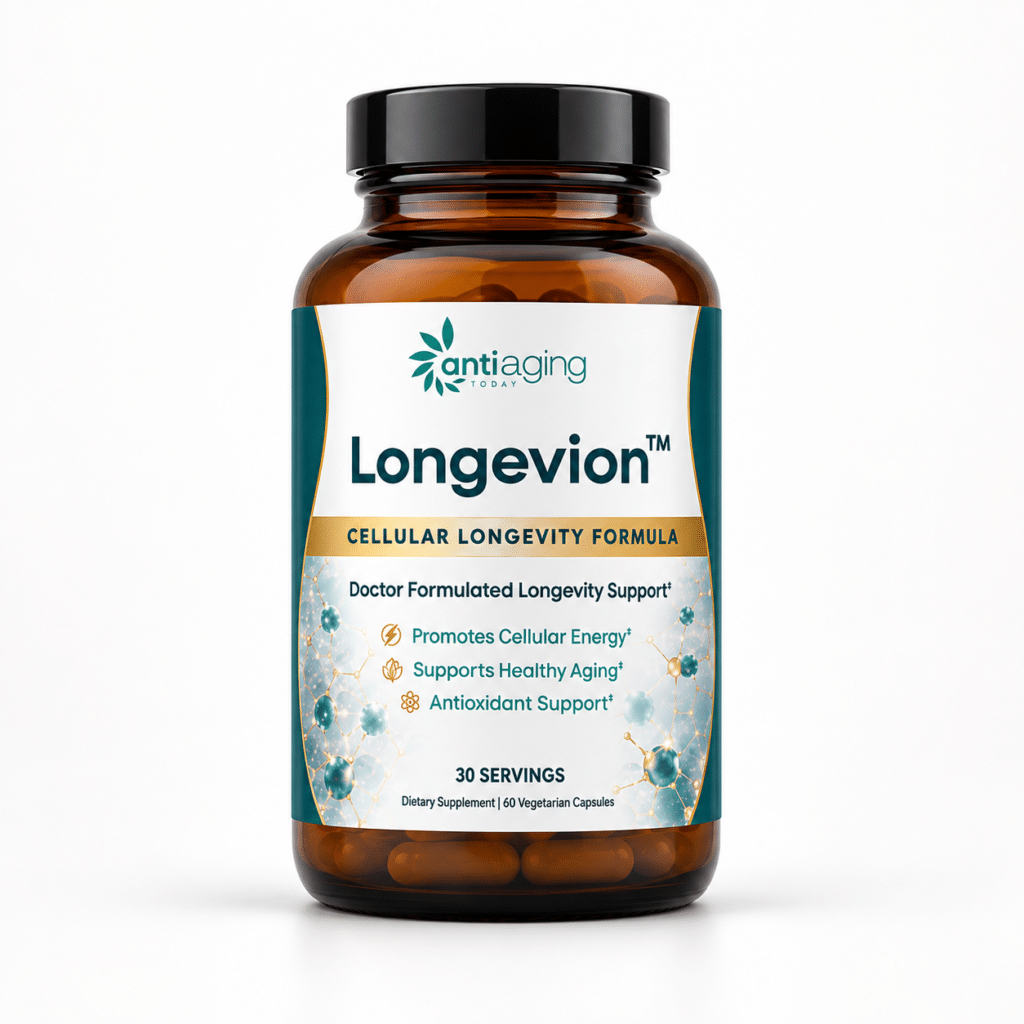
Just as important is what an all-in-one doesn’t cover. Longevion contains no omega-3s and no creatine, and its magnesium is a supporting dose, not a full replacement for a magnesium-poor diet. For omega-3s, I recommend ProOmega 3.6.9. You can browse everything I’ve selected in our longevity supplements collection and the NAD+ and NMN collection.
Frequently Asked Questions
What is the best supplement for longevity?
There isn’t one single best longevity supplement. The best-supported options are omega-3s, vitamin D3 (if you’re low), magnesium (if your diet falls short), a multivitamin for cognitive aging, and creatine with strength training. The right choice depends on what you’re actually missing, which is why a blood test and a diet review beat any trending ingredient.
Do longevity supplements actually work?
Some do, for specific things. Omega-3s and vitamin D have slowed measured markers of biological aging in randomized trials, and multivitamins have slowed cognitive aging in older adults. No supplement has been proven to extend human lifespan, and many popular “anti-aging” ingredients are still supported mainly by animal studies.
Is NMN worth taking for longevity?
For many adults over 40, yes, as long as expectations stay realistic. NMN reliably raises NAD+ levels, and small randomized trials show improvements in walking endurance, muscle insulin sensitivity and aerobic capacity, with a good short-term safety record. It hasn’t been proven to extend lifespan. The best-supported dose range is 250–600 mg a day, taken alongside the basics, not instead of them.
What supplements do longevity doctors take?
Most physicians focused on longevity prioritize the basics: vitamin D, omega-3s, magnesium and creatine, adjusted to lab results. Some add NAD+ precursors and CoQ10. Personally, I take an NAD+ precursor with CoQ10 and cofactors, plus omega-3s, but what matters is matching supplements to your own labs, medications and diet.
Can you take all of these longevity supplements together?
Most of them can be combined safely by healthy adults at standard doses, but check interactions first. Vitamin K2 conflicts with warfarin, high-dose omega-3s can add to bleeding risk and raise atrial fibrillation risk, magnesium should be spaced from some antibiotics and osteoporosis medications, and CoQ10 can modestly lower blood pressure. Review your full list with your doctor or pharmacist.
Are longevity supplements safe if I take heart medications?
Often yes, but not automatically. Statin users may benefit from CoQ10, which statins deplete. Anyone on blood thinners needs to be careful with vitamin K2, high-dose fish oil and some herbal products. People on blood pressure medications should know that CoQ10 and magnesium can lower blood pressure a little. Always tell your cardiologist what you’re taking.
Key Takeaways
- The best longevity supplements are the unglamorous ones: omega-3s, vitamin D3, magnesium, a multivitamin and creatine, matched to what you’re actually missing.
- Omega-3s and vitamin D have now slowed measured biological aging markers in randomized human trials.
- CoQ10 has strong data in heart failure and older adults, and is especially relevant if you take a statin.
- NMN earns a B: it reliably raises NAD+ and has shown functional benefits in randomized trials, though those trials are small and long-term outcome data is still developing.
- Taurine, fisetin, spermidine and alpha-ketoglutarate are ahead of their human evidence.
- No supplement outperforms exercise, sleep, and blood pressure and cholesterol control.
About the Author
Dr. Don Zone, MD, FACC, FAARM, is a board-certified cardiologist, a Fellow of the American College of Cardiology and of the American Academy of Anti-Aging Medicine, and the founder of Anti-Aging Today. Disclosure: Dr. Zone formulated Longevion™ and has a financial interest in its sale. Anti-Aging Today also sells other products mentioned in this article.
References
- Bischoff-Ferrari HA, et al. Individual and additive effects of vitamin D, omega-3 and exercise on DNA methylation clocks of biological aging in older adults from the DO-HEALTH trial. Nat Aging. 2025.
- Manson JE, et al. Marine n−3 fatty acids and prevention of cardiovascular disease and cancer (VITAL). N Engl J Med. 2019.
- Bhatt DL, et al. Cardiovascular risk reduction with icosapent ethyl (REDUCE-IT). N Engl J Med. 2019.
- Hahn J, et al. Vitamin D and marine omega 3 fatty acid supplementation and incident autoimmune disease: VITAL. BMJ. 2022.
- Zhu H, et al. Vitamin D3 and marine omega-3 fatty acids supplementation and leukocyte telomere length: 4-year findings from VITAL. Am J Clin Nutr. 2025.
- Veronese N, et al. Effect of oral magnesium supplementation on physical performance in healthy elderly women. Am J Clin Nutr. 2014.
- Fang X, et al. Dietary magnesium intake and the risk of cardiovascular disease, type 2 diabetes, and all-cause mortality. BMC Med. 2016.
- Vyas CM, et al. Effect of multivitamin-mineral supplementation versus placebo on cognitive function: COSMOS. Am J Clin Nutr. 2024.
- Chilibeck PD, et al. Effect of creatine supplementation during resistance training on lean tissue mass and muscular strength in older adults: a meta-analysis. Open Access J Sports Med. 2017.
- Mortensen SA, et al. The effect of coenzyme Q10 on morbidity and mortality in chronic heart failure (Q-SYMBIO). JACC Heart Fail. 2014.
- Alehagen U, et al. Cardiovascular mortality and N-terminal-proBNP reduced after combined selenium and coenzyme Q10 supplementation (KiSel-10). Int J Cardiol. 2013.
- Head-to-head comparison of NAD+ precursors in humans. Nat Metab. 2026.
- Geleijnse JM, et al. Dietary intake of menaquinone is associated with a reduced risk of coronary heart disease: the Rotterdam Study. J Nutr. 2004.
- Schwarz C, et al. Effects of spermidine supplementation on cognition and biomarkers in older adults with subjective cognitive decline (SmartAge). JAMA Netw Open. 2022.
- Igarashi M, et al. Chronic nicotinamide mononucleotide supplementation elevates blood nicotinamide adenine dinucleotide levels and alters muscle function in healthy older men. NPJ Aging. 2022.
- Yi L, et al. The efficacy and safety of β-nicotinamide mononucleotide (NMN) supplementation in healthy middle-aged adults: a randomized, multicenter, double-blind, placebo-controlled, parallel-group, dose-dependent clinical trial. GeroScience. 2023.
- Yoshino M, et al. Nicotinamide mononucleotide increases muscle insulin sensitivity in prediabetic women. Science. 2021.
- Liao B, et al. Nicotinamide mononucleotide supplementation enhances aerobic capacity in amateur runners: a randomized, double-blind study. J Int Soc Sports Nutr. 2021.
Medical disclaimer: This article is for educational purposes only and is not a substitute for professional medical advice, diagnosis, or treatment. Always consult your physician before beginning any supplement, particularly if you take prescription medication, are pregnant or nursing, or have a medical condition. These statements have not been evaluated by the Food and Drug Administration. This product is not intended to diagnose, treat, cure, or prevent any disease.