

Medically reviewed by Dr. Don Zone, MD, FACC, FAARM — Board-Certified Cardiologist
Heart disease is the leading cause of death for women in the United States, yet it’s still the condition women are least likely to worry about. In my practice, I see the consequences of that gap every week. So when women ask me about CoQ10 — usually for energy, fertility or skin — I’m glad to talk about it, because it’s one of the few popular supplements whose story begins in the heart.
This guide covers what CoQ10 actually does, which benefits for women are well supported and which are still hopeful, how much to take, and who is most likely to benefit. I’ve graded each claim so you can see where the evidence is strong and where it’s thin.
The Short Answer: What Are the Benefits of CoQ10 for Women?
CoQ10 is a compound every cell uses to make energy, and levels fall with age and with statin use. For women, the best-supported benefits are heart support (especially in heart failure, under a doctor’s care) and improved IVF outcomes in women with low ovarian reserve. There’s moderate evidence that it can reduce migraine frequency and fatigue, and early evidence that it can reduce fine wrinkles. It does not meaningfully lower blood pressure on its own. Most studies use 100–300 mg a day, taken with a meal containing fat. CoQ10 is generally well tolerated, but women taking warfarin, blood pressure medication, or who are pregnant should check with their doctor first.
What CoQ10 Does in Your Body
Coenzyme Q10 sits inside your mitochondria, the energy factories in every cell, where it shuttles electrons along the chain that produces ATP. It also acts as a fat-soluble antioxidant in cell membranes. Organs with the highest energy demands — the heart above all, plus the kidneys, liver and muscles — carry the most CoQ10.
Two things lower your levels over time:
- Age. Tissue CoQ10 levels in the human heart decline substantially from early adulthood to later life, according to classic autopsy research (Kalén et al., Lipids, 1989).
- Statins. Statins block the same pathway your body uses to make both cholesterol and CoQ10, so they lower blood CoQ10 levels. That’s why I wrote a separate guide on CoQ10 and statins.
Your body makes most of its own CoQ10, and food provides only a small amount, typically a few milligrams a day from meat, fish and organ meats. For a deeper look at the biology, see our CoQ10 and longevity guide.
CoQ10 Benefits for Women, Graded by Evidence
| Benefit | Evidence grade | What the research shows |
|---|---|---|
| Heart support (heart failure) | B | Fewer major cardiac events in a 2-year randomized trial |
| Fertility (IVF with low ovarian reserve) | B− | Better ovarian response and higher clinical pregnancy rates; no proven increase in live births |
| Migraine prevention | C+ | Rated “possibly effective” by neurology guidelines |
| Fatigue and energy | C | Modest reduction in fatigue across a meta-analysis of trials |
| Statin muscle aches | C | Mixed trial results; some meta-analyses show benefit |
| Skin aging | C | One small trial showed fewer wrinkles and smoother skin |
| Blood pressure | D | No significant effect in a Cochrane review |
| Menopause symptoms, bone health | Insufficient | Not well studied |
A = strong, consistent trials; B = good randomized evidence, often in a specific group; C = emerging or mixed; D = not supported.
1. Heart Health — Grade B
This is the benefit closest to my specialty, and it’s where CoQ10’s best evidence lives. In the Q-SYMBIO trial, 420 patients with moderate-to-severe heart failure took 100 mg of CoQ10 three times a day or a placebo alongside their usual treatment. After two years, major adverse cardiovascular events occurred in 15% of the CoQ10 group versus 26% of the placebo group, and cardiovascular deaths were also lower. In a separate Swedish trial of older adults (KiSel-10), four years of CoQ10 combined with selenium was followed by lower cardiovascular mortality.
Two important caveats. First, these were specific populations, and heart failure must be treated by a cardiologist, not with a supplement. Second, women have been underrepresented in heart trials generally. Still, the biology applies to everyone: the heart is the most energy-hungry muscle you have, and CoQ10 is part of how it makes that energy. You can explore heart-focused options in our heart health collection.
2. Fertility and Egg Quality — Grade B− (in IVF with low ovarian reserve)
Eggs are among the most mitochondria-rich cells in the body, and egg quality declines with age partly because their energy production declines. That’s the rationale behind CoQ10 for fertility — and here, there’s real human data.
- In a randomized trial of 186 women under 35 with poor ovarian reserve, 60 days of CoQ10 before an IVF cycle led to more eggs retrieved, better fertilization and more high-quality embryos than no pretreatment.
- A meta-analysis of five randomized trials (449 women) undergoing assisted reproduction found higher clinical pregnancy rates with CoQ10 (28.8% vs 14.1%), but no significant difference in live births or miscarriage.
The honest summary: CoQ10 appears to improve how the ovaries respond in women undergoing IVF, especially those with low ovarian reserve, and many fertility clinics now recommend it. Whether it increases the number of babies born isn’t yet proven, and evidence for natural conception is limited. Fertility trials typically used doses up to 600 mg a day, which should be guided by your reproductive endocrinologist.
3. Migraine Prevention — Grade C+
Migraine is about three times more common in women than men, and mitochondrial energy problems are one proposed contributor. The American Academy of Neurology and American Headache Society guideline rates CoQ10 as “possibly effective” for migraine prevention, based mainly on a small trial using 300 mg a day. It’s not as strong as prescription options, but it’s a reasonable, low-risk add-on to discuss with your neurologist.
4. Energy and Fatigue — Grade C
Because CoQ10 is part of the energy-production chain, fatigue is one of the most common reasons women try it. A 2022 meta-analysis of 13 randomized trials found CoQ10 modestly reduced fatigue compared with placebo, with larger effects at higher doses and longer durations. Most participants had underlying health conditions, so results in healthy women may be smaller. Persistent fatigue always deserves a medical workup first — thyroid problems, anemia and sleep apnea are common and treatable.
5. Statin Muscle Aches — Grade C
Women are somewhat more likely than men to report muscle symptoms on statins. One meta-analysis of randomized trials found CoQ10 reduced statin-related muscle pain, weakness and cramps, but other analyses have not confirmed a benefit. My approach: never stop a statin on your own, and if you have muscle aches, a trial of CoQ10 is low-risk and worth discussing. I go deeper in CoQ10 and statins.
6. Skin Aging — Grade C
In a 12-week randomized, placebo-controlled trial of 33 women aged 45 to 60, oral CoQ10 at 50 or 150 mg a day reduced fine wrinkles and improved skin smoothness compared with placebo. It didn’t change skin hydration or thickness. That’s encouraging, but it’s one small trial co-funded by the ingredient maker, so I’d treat skin benefits as a possible bonus rather than a reason to take CoQ10.
7. Blood Pressure — Grade D
You’ll often see CoQ10 marketed for blood pressure. A Cochrane review found no significant blood pressure reduction in well-designed trials. If your blood pressure is high, treat it with proven approaches — it’s one of the most important things you can do for your heart.
CoQ10 Dosage for Women and Which Form to Choose
Here’s how doses in the research line up:
| Goal | Doses studied | Notes |
|---|---|---|
| General support after 40 / statin users | 100–200 mg/day | A common, well-tolerated range |
| Skin | 50–150 mg/day | One small trial |
| Migraine prevention | ~300 mg/day | Discuss with your neurologist |
| Heart failure | 300 mg/day (100 mg three times daily) | Only under a cardiologist’s care |
| IVF support | Up to 600 mg/day, usually for 2–3 months before a cycle | Only under a fertility specialist’s guidance |
- Take it with food that contains fat. CoQ10 is fat-soluble and absorbs poorly on an empty stomach.
- Split larger doses. Two smaller doses absorb better than one large one.
- Morning or midday is best for many people. Some find CoQ10 mildly energizing, and higher doses taken late can interfere with sleep.
- Be patient. Blood levels build over a few weeks; most trials ran 8 weeks or longer.
Ubiquinone vs Ubiquinol
CoQ10 comes in two forms: ubiquinone (the oxidized form) and ubiquinol (the reduced, “active antioxidant” form). Your body converts between them constantly. Ubiquinol is often marketed as better absorbed, and some studies support that, especially in older adults, but it’s also more expensive and less stable. Importantly, the landmark heart trials, including Q-SYMBIO, used ubiquinone. For most women, a well-formulated ubiquinone taken with food works well. I compare both in detail in ubiquinone vs ubiquinol.
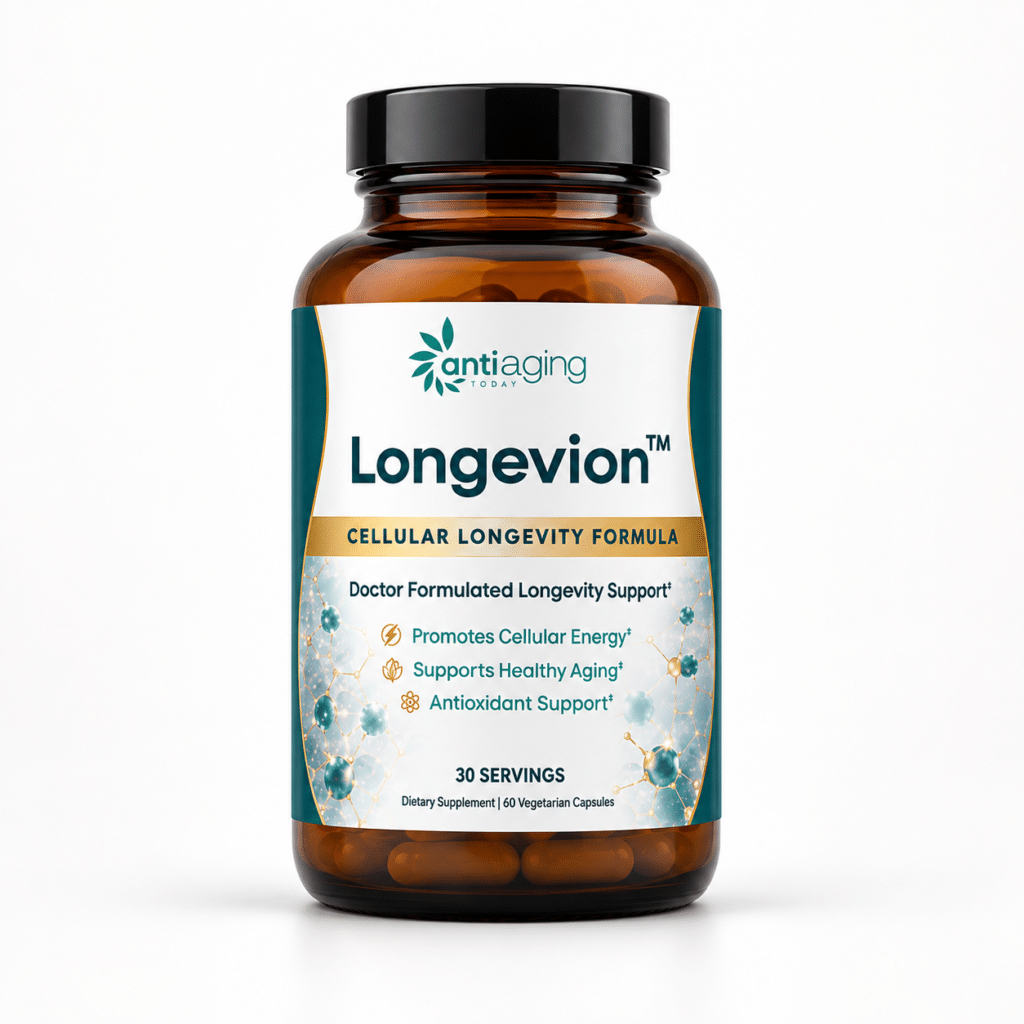
When I formulated Longevion™, I used 150 mg of ubiquinone CoQ10 — squarely in the range used for general support — alongside NMN, methylated B vitamins, magnesium malate, vitamin D3 and K2, because these ingredients work in the same cellular energy pathway. It’s taken as two capsules in the morning, ideally with breakfast. The combination itself hasn’t been tested as a unit in a clinical trial. Note that 150 mg isn’t intended to replace a heart failure, migraine or fertility protocol your doctor prescribes.
Who Benefits Most From CoQ10?
- Women taking statins, especially if they have muscle aches.
- Women over 40, as natural CoQ10 levels decline with age.
- Women preparing for IVF, particularly with low ovarian reserve, under their fertility specialist’s guidance.
- Women with frequent migraines, as an add-on discussed with their neurologist.
- Women with heart failure, only as part of a plan with their cardiologist.
Safety, Side Effects and Interactions
CoQ10 has a strong safety record in clinical trials. The most common side effects are mild: stomach upset, nausea, diarrhea, and occasionally trouble sleeping at higher doses. A few interactions matter, according to the NIH National Center for Complementary and Integrative Health:
- Warfarin: CoQ10 may make warfarin less effective, raising clot risk. Don’t start or stop CoQ10 without your doctor checking your INR.
- Blood pressure medications: CoQ10 may add a small additional lowering effect; monitor if you start it.
- Chemotherapy: antioxidants may interfere with some cancer treatments. Check with your oncologist.
- Pregnancy and breastfeeding: there isn’t enough safety data for routine use. Only take CoQ10 during pregnancy if your obstetrician recommends it.
Frequently Asked Questions
What does CoQ10 do for women?
CoQ10 helps every cell produce energy and protects cell membranes from oxidative damage. For women, the best evidence supports heart health in heart failure and improved ovarian response during IVF, with moderate evidence for fewer migraines and less fatigue, and early evidence for fewer fine wrinkles.
Should women over 40 take CoQ10?
Many women over 40 can reasonably consider it, because natural CoQ10 levels decline with age and statin use. It’s most useful for women on statins, those with low energy after other causes are ruled out, and those with migraines. It isn’t essential for everyone, so discuss it with your doctor, especially if you take medications.
How much CoQ10 should a woman take per day?
For general support, most studies use 100–200 mg a day, taken with a meal containing fat. Higher doses, such as 300 mg for migraine or heart failure and up to 600 mg before IVF, should be used only under a doctor’s guidance.
Does CoQ10 help with fertility?
In women undergoing IVF with low ovarian reserve, randomized trials show CoQ10 can improve egg retrieval and embryo quality and raise clinical pregnancy rates. It hasn’t yet been shown to increase live birth rates, and evidence for natural conception is limited. Talk to your fertility specialist about dose and timing.
Can CoQ10 help with menopause?
There isn’t good evidence that CoQ10 relieves hot flashes or other menopause symptoms. However, heart disease risk rises after menopause, and CoQ10’s heart and energy benefits remain relevant during this stage of life.
Is it better to take CoQ10 in the morning or at night?
Morning or midday with a meal works best for most people. CoQ10 needs dietary fat for absorption, and some people find higher doses taken late in the day interfere with sleep.
Should women take ubiquinol or ubiquinone?
Both work. Ubiquinol may absorb somewhat better in some people, but it costs more. The major heart trials used ubiquinone, and a quality ubiquinone taken with food is a sound choice for most women.
Key Takeaways
- CoQ10 powers cellular energy, and levels fall with age and statin use.
- The strongest evidence for women is heart support in heart failure and better ovarian response during IVF.
- Moderate evidence supports fewer migraines and less fatigue; skin benefits are early; blood pressure effects aren’t supported.
- Most women use 100–200 mg a day with food; higher doses belong under a doctor’s care.
- Check with your doctor if you take warfarin or blood pressure medication, are pregnant, or are undergoing cancer treatment.
About the Author
Dr. Don Zone, MD, FACC, FAARM, is a board-certified cardiologist, a Fellow of the American College of Cardiology and of the American Academy of Anti-Aging Medicine, and the founder of Anti-Aging Today. Disclosure: Dr. Zone formulated Longevion™ and has a financial interest in its sale. For how CoQ10 compares with other healthy-aging ingredients, see the best longevity supplements, graded by evidence.
References
- Mortensen SA, et al. The effect of coenzyme Q10 on morbidity and mortality in chronic heart failure: results from Q-SYMBIO. JACC Heart Fail. 2014.
- Alehagen U, et al. Cardiovascular mortality and N-terminal-proBNP reduced after combined selenium and coenzyme Q10 supplementation (KiSel-10). Int J Cardiol. 2013.
- Xu Y, et al. Pretreatment with coenzyme Q10 improves ovarian response and embryo quality in low-prognosis young women with decreased ovarian reserve: a randomized controlled trial. Reprod Biol Endocrinol. 2018.
- Florou P, et al. Does coenzyme Q10 supplementation improve fertility outcomes in women undergoing assisted reproductive technology procedures? A systematic review and meta-analysis. J Assist Reprod Genet. 2020.
- Holland S, et al. Evidence-based guideline update: NSAIDs and other complementary treatments for episodic migraine prevention in adults. Neurology. 2012.
- Tsai IC, et al. Effectiveness of coenzyme Q10 supplementation for reducing fatigue: a systematic review and meta-analysis of randomized controlled trials. Front Pharmacol. 2022.
- Qu H, et al. Effects of coenzyme Q10 on statin-induced myopathy: an updated meta-analysis of randomized controlled trials. J Am Heart Assoc. 2018.
- Žmitek K, et al. The effect of dietary intake of coenzyme Q10 on skin parameters and condition: results of a randomised, placebo-controlled, double-blind study. BioFactors. 2017.
- Ho MJ, et al. Blood pressure lowering efficacy of coenzyme Q10 for primary hypertension. Cochrane Database Syst Rev. 2016.
- Kalén A, Appelkvist EL, Dallner G. Age-related changes in the lipid compositions of rat and human tissues. Lipids. 1989;24(7):579–584.
- National Center for Complementary and Integrative Health. Coenzyme Q10.
Medical disclaimer: This article is for educational purposes only and is not a substitute for professional medical advice, diagnosis, or treatment. Always consult your physician before beginning any supplement, particularly if you take prescription medication, are pregnant or nursing, or have a medical condition. These statements have not been evaluated by the Food and Drug Administration. This product is not intended to diagnose, treat, cure, or prevent any disease.